Building an auth flow with AI
Introducing the data room app
20 Jul 2025
In the first part of this series, I shared my experience with vibe coding to build a markdown-based data room application for General Folders. In particular, I highlighted best practices for working with AI coding assistants.
Now, in the second part, I’ll focus on one of the most critical aspects of any application: secure authentication. Specifically, I’ll walk through implementing magic link authentication, a passwordless approach that provides a seamless experience for investors accessing confidential documents.
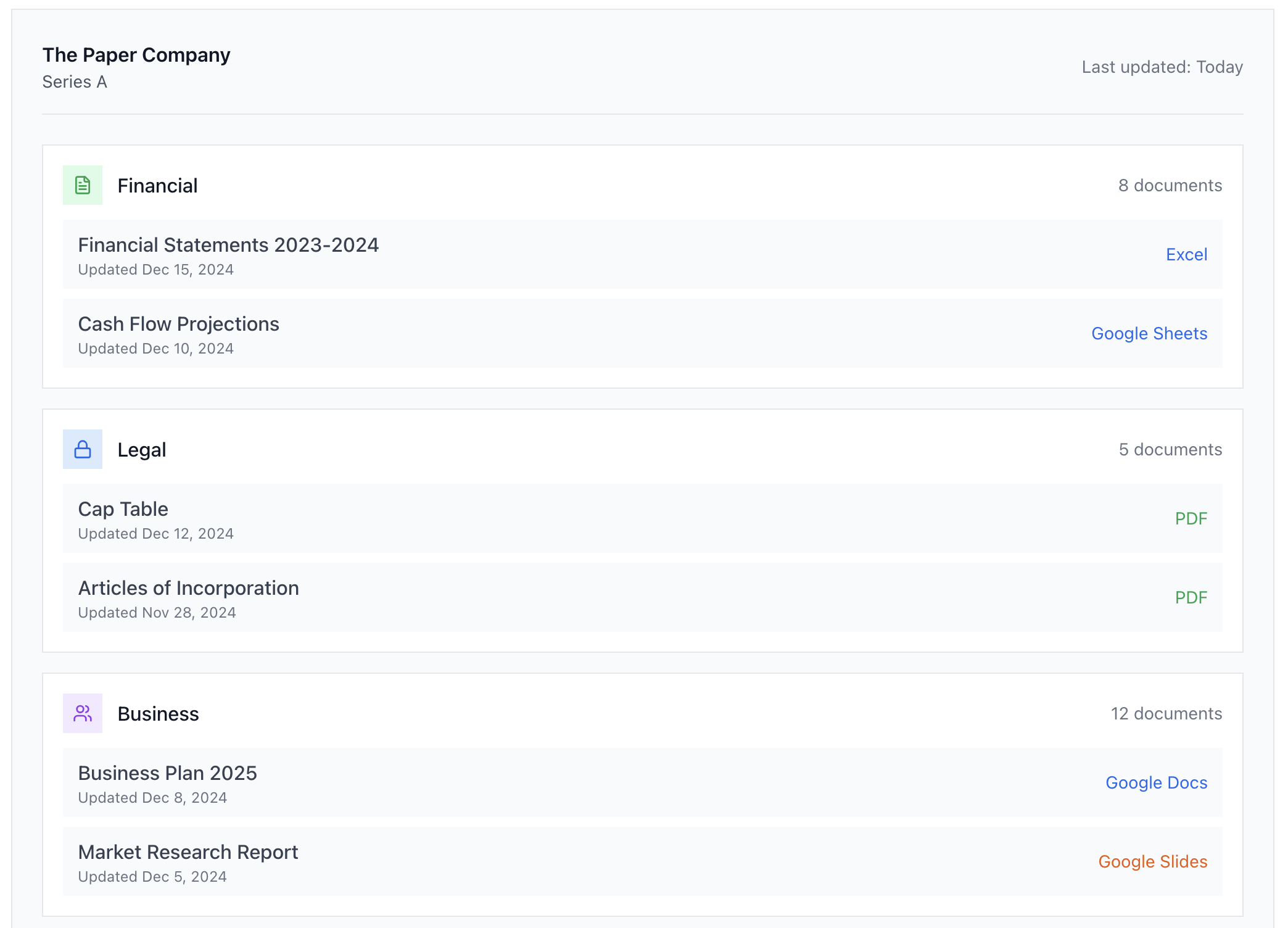 The Data Room App (thedataroom.app) provides a clean, intuitive interface for investors to access confidential documents.
Solving the authentication challenge
At first, I tried to implement magic links with Windsurf. Given that auth flows are not my area of expertise, I needed more opinionated help. I then tried Replit which provided a quick and working solution.
Replit is a browser-based IDE and hosting platform that started in 2016 as a simple code playground but has evolved into a comprehensive development environment. What drew me to it was its ability to handle full-stack applications with built-in authentication, along with serverless deployments.
Replit vs Windsurf: technical comparison
Replit features
Authentication and session management
Replit’s integrated authentication blueprints provide pre-configured Passport.js setups, session store integration with PostgreSQL, and automatic HTTPS for secure cookie handling. Magic link authentication was implemented in 15 minutes compared to hours of OAuth configuration debugging.
Database integration
Replit enables instant PostgreSQL provisioning through Neon. Connection strings, pooling, and SSL certificates are handled automatically. Drizzle ORM integration works seamlessly with database push deployments without migration file management.
Update (July 2025): Replit has since launched separate development and production databases, which makes the platform more suitable for developing real-world applications. This feature enables safer iteration by isolating development changes from live customer data.
Deployment infrastructure
The platform handles load balancing and scaling automatically.
Replit limitations
Git operations lack the intuitiveness of terminal workflows. Even basic branching and commit management feel clunky in the interface. Simple git commands in a terminal turn into vague processes with less feedback and control.
The container-based environment limits access to lower-level system functions and file operations, which can make debugging more challenging when compared to local development.
Windsurf comparison
Windsurf provides control with traditional Git workflows, intuitive file system access, and familiar terminal operations. However, the setup overhead for authentication, databases, and deployment significantly slows initial development velocity compared to Replit’s integrated infrastructure.
Data room platform implementation
Here are the implementation details we narrowed in on with Replit.
Tech stack
- React frontend with TypeScript and shadcn/ui components
- Express.js backend with PostgreSQL database
- Drizzle ORM for type-safe database operations
- JWT-based authentication with 7-day token expiration
Architecture decisions
- Simple content management: Founders can organize their data room using a simple Markdown file, just like writing documentation. No clunky admin panels.
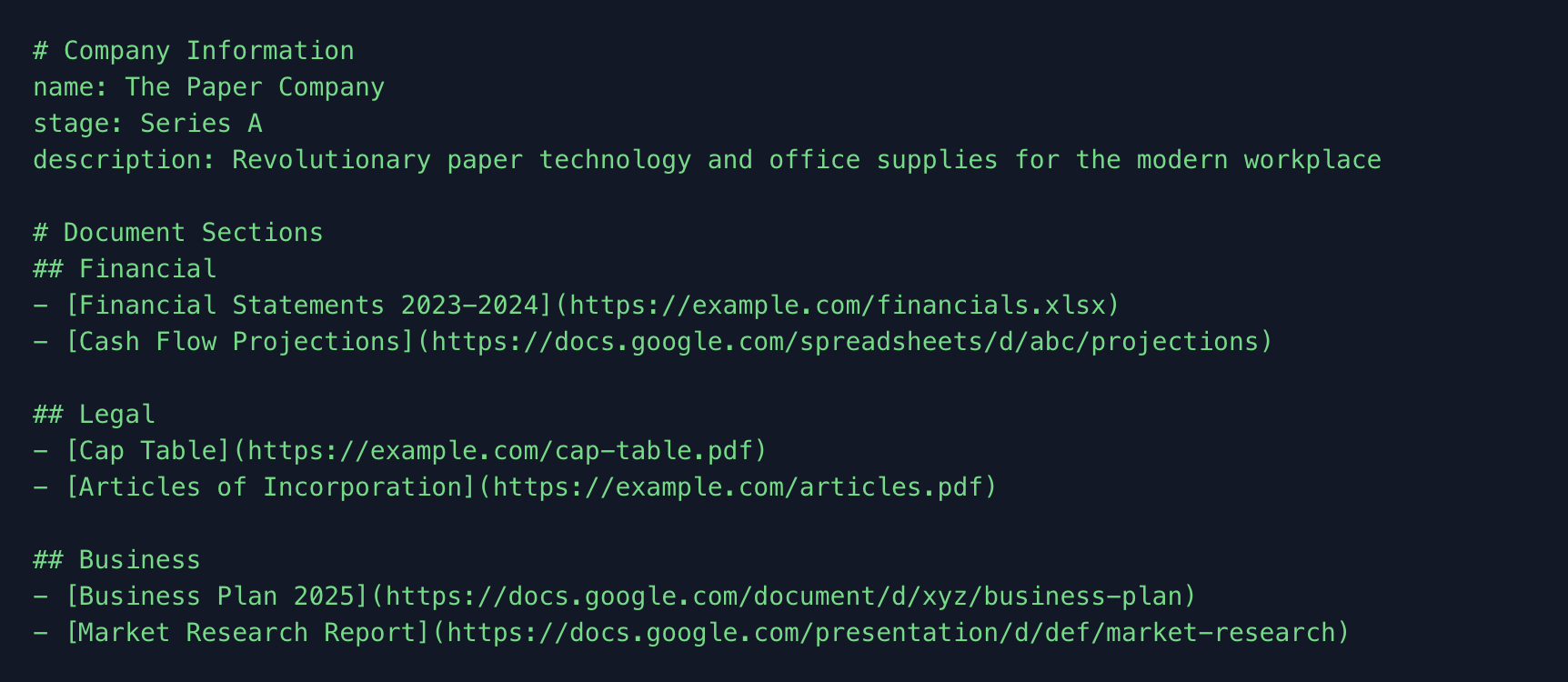 Changes to sections.md are reflected instantly - no rebuild required.
-
Flexible document handling: The app supports both direct file uploads (protected by authentication) and links to existing documents in Google Drive or Dropbox.
-
Passwordless authentication: Investors access the data room through magic links sent to their email.
-
Role-based access: Different permissions for founders (who pay for the service) and investors (who get free access).
-
Engagement analytics: Founders can see which documents investors have accessed and when.
-
Frictionless invitations: Founders can invite investors with a simple email, which in turn generates secure access tokens.
Implementation results
The platform is deployed at thedataroom.app and operates in waitlist mode for market validation. The implementation includes PostgreSQL-backed secure sessions, reliable email delivery for magic links and invitations, and robust file security with strict validation and secure storage for documents up to 50MB.
Development timeline
Here’s a summary of our development timeline.
- Week 1: Authentication and data modeling implementation
- Week 2: Document management and UI development
- Week 3: Email system integration and production deployment
Feedback request
If you have past experience with data rooms, I’d love to hear your thoughts on the platform. If you’re going to be needing a data room soon, I’d love to show you what we’ve built and get your feedback.
Live platform: thedataroom.app
Access: Waitlist signups receive discounted pricing; investor access remains free but you would need an invite.